Executive Summary
Hotel automation is no longer futuristic it’s the present. From AI-powered chatbots to keyless check-ins and automated housekeeping schedules, hotels of every size are using automation to cut costs, save time, and improve guest satisfaction. On average, US hotels that implement automation save 15–25% in labor hours and increase guest satisfaction scores by 10–20% within the first year.
This guide explains what hotel automation is, how it works, real-world case studies, cost ranges, ROI timelines, vendor comparisons (including Purple Square AI), and an actionable 9-step playbook for successful adoption. If you’ve ever wondered, “How do I actually start with hotel automation?” this is your ultimate resource.
What Is Hotel Automation?
Hotel automation is the use of technology software, hardware, or AI to replace or streamline manual hotel tasks. Instead of front-desk staff checking in every guest, an app issues digital keys. Instead of manually scheduling housekeeping, software assigns rooms based on occupancy.
Confession (industry pain): Many hotels adopt automation without piloting, only to waste months fixing integration issues. This guide shows how to avoid that trap.
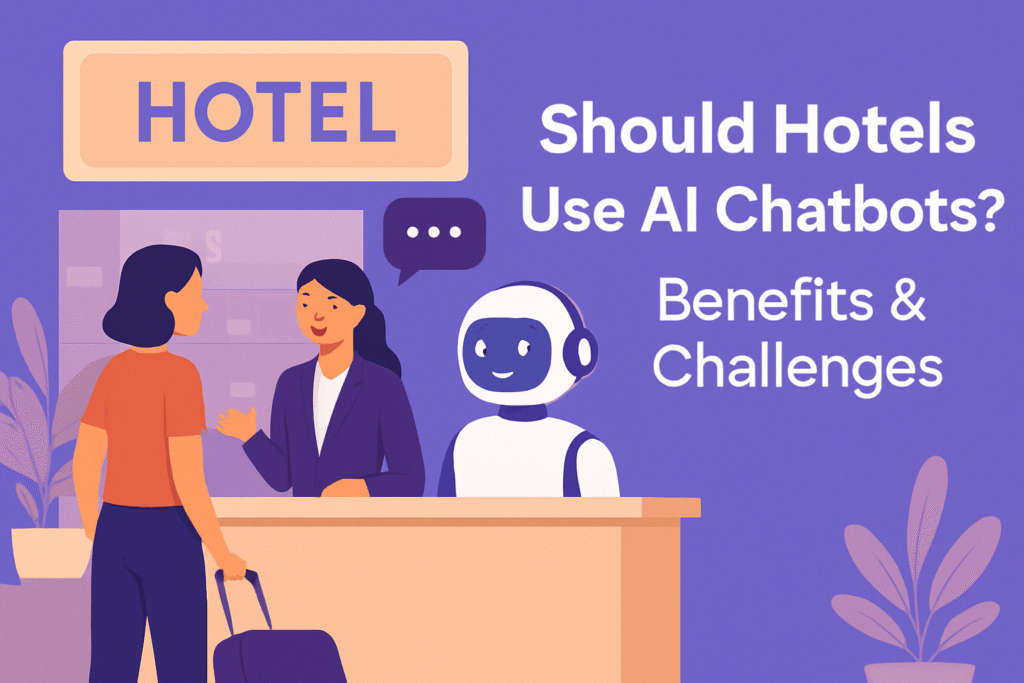
Why Hotel Automation Matters in 2025
Automation isn’t just about convenience; it’s survival in a labor-constrained, competitive market.
- Labor shortages: Hospitality has one of the highest vacancy rates in the US.
- Guest expectations: Today’s travelers expect fast, digital-first experiences.
- Energy costs: With utilities rising, energy-saving automation delivers real ROI.
Quantified benefits:
- Labor cost reduction: 15–25% fewer staff hours for front-desk and housekeeping.
- Revenue uplift: RevPAR improvements of 3–5% within 6–12 months.
- Guest satisfaction: NPS increases of 6–10 points after implementing mobile check-in and AI chatbots.
Contrarian note: Automation doesn’t fix bad service culture. Automating poor processes just makes problems faster.
Core Components of Hotel Automation
Automation can touch every part of a hotel’s ecosystem.
- Property Management Systems (PMS): The backbone centralizes bookings, check-ins, and room assignments.
- Guest-facing automation: Mobile check-in, digital room keys, and AI chatbots like Purple Square AI.
- Back-office automation: Housekeeping schedules, procurement, revenue optimization.
- Building automation & IoT: Smart HVAC, lighting, occupancy sensors.
- Robotics: Delivery robots and automated cleaning devices.
Security reminder: Every automation system must encrypt guest data, meet PCI compliance, and undergo regular audits.
How Hotel Automation Works: Architecture & Integrations
Automation only works if systems “talk” to each other.
- Typical data flow: Guest books → PMS records → triggers digital key → notifies housekeeping → syncs billing.
- Integration platforms (iPaaS): Middleware like Mulesoft or Zapier connects fragmented systems.
- Network requirements: Stable Wi-Fi and segmented networks for IoT devices.
- Failure modes: Bad API connections, outdated firmware, or poor vendor support.
Pro tip: Always request API documentation before signing with a vendor.
Cost, Pricing Models & Expected ROI
Automation isn’t free but payback is fast.
- One-time costs: Hardware (digital locks, sensors, kiosks).
- Recurring costs: Software subscriptions ($5–15/room/month on average).
- Professional services: Integrations, training, customization.
Ballpark scenarios (2025):
- Small boutique (50 rooms): $1,000–$3,000/month.
- Mid-size (150 rooms): $5,000–$10,000/month.
- Large chain (500+ rooms): $20,000+/month.
ROI: Most hotels break even within 12–18 months. Energy automation alone can save $500–$1,000 per room annually.
Hidden costs: Staff training, contract lock-ins, and API fees.
Step-by-Step Implementation Playbook
Here’s a 9-step roadmap to adopt automation safely:
- Audit current processes: Map manual tasks and pain points.
- Set goals: Cut check-in time by 50%, reduce housekeeping labor by 20%, etc.
- Prioritize candidates: Use an impact vs. effort matrix.
- Select vendors: Focus on integration capabilities.
- Pilot test (30–90 days): Choose 1–2 automation projects.
- Measure KPIs: Guest wait time, labor hours, NPS.
- Train staff: Build confidence, avoid resistance.
- Scale gradually: Expand pilots into full operations.
- Review quarterly: Adjust automations based on results.
Pilot case: A Texas boutique hotel piloted mobile check-in. Result: 22% fewer front-desk hours in 90 days, guest NPS up +6.
Tool & Vendor Comparison
Choosing the right vendor is critical. Here’s a snapshot of leading solutions in 2025:
| Vendor / Tool | Best For | Price Range | Pros | Cons |
|---|---|---|---|---|
| Mews | Cloud PMS | $$ | Flexible, API-first | Costly for small hotels |
| Cloudbeds | PMS + channel manager | $–$$ | Easy onboarding | Limited deep automation |
| Operto | IoT & guest experience | $$–$$$ | Strong room automation | Hardware cost |
| Oracle OPERA | Enterprise PMS | $$$ | Feature-rich, scalable | Expensive, complex |
| Siteminder | Distribution & channels | $–$$ | Great OTA connectivity | Narrow automation scope |
| SoftBank Robotics | Delivery/cleaning robots | $$$ | Novelty, labor savings | High upfront cost |
| Verdant | Energy management | $$ | Big energy savings | Integration required |
| Purple Square AI | AI chatbots for hotels | $–$$ | 24/7 guest support, easy setup | Needs PMS integration |
Why Purple Square AI stands out: Unlike generic chatbots, Purple Square AI is tailored for hotels handling bookings, FAQs, upselling, and guest support seamlessly. It reduces front-desk workload and boosts guest satisfaction with natural, conversational AI.
Case Studies
1. Small Boutique (75 rooms, Austin, TX)
- Automation used: Mobile check-in, digital keys.
- Results: 22% fewer front-desk hours, +6 NPS, payback in 10 months.
2. Mid-Size Independent (150 rooms, Chicago, IL)
- Automation used: Housekeeping scheduling via PMS.
- Results: 30% faster room turnover, lost linen costs -12%.
3. Regional Chain (500 rooms, Florida)
- Automation used: Revenue ops + AI chatbots (Purple Square AI).
- Results: RevPAR +4.2%, booking abandonment -18%.
4. Failure Case
- Problem: Tried to automate 6 processes at once.
- Outcome: Staff confusion, system downtime.
- Lesson: Pilot before scaling.
Common Pitfalls & Troubleshooting
- Data silos: Fix with middleware.
- Over-automation: Guests still want human touch.
- Poor training: Leads to errors and resistance.
- Security gaps: IoT devices are hackable segregate networks.
Staff & Labor Considerations
Will automation replace jobs? Not exactly. It shifts roles:
- Front desk → guest success managers.
- Housekeeping → quality control + training roles.
- IT/operations → automation managers.
Best practice: Communicate early, offer retraining, and position automation as an enabler.
Security, Privacy & Compliance
- Guest data protection: PCI-DSS for payments, GDPR for international travelers.
- IoT security: Firmware updates, firewalls, VLAN segmentation.
- Vendor contracts: Demand SLA uptime, data ownership clauses, and exit plans.
Measuring Success
Track these KPIs:
- Guest check-in time
- Staff hours per occupied room
- RevPAR lift
- NPS (guest satisfaction)
- % of tasks automated
- Energy savings
Dashboard tip: Daily ops dashboard + monthly strategic review.
Future Trends
- AI personalization: Tailored upselling, guest recognition.
- Edge computing: Localized automation for faster, more secure systems.
- Sustainability: Automation tied to carbon reduction.
- Contrarian view: Expect “automation fatigue” guests will crave balanced human interaction.
FAQs
Q: What is hotel automation?
Hotel automation is using technology like PMS, chatbots, IoT, and digital keys to streamline hotel operations and improve guest experiences.
Q: How much does it cost?
Small hotels may spend $1–3k/month; large chains $20k+. ROI is usually seen within 12–18 months.
Q: Will automation replace hotel jobs?
Not entirely. It shifts tasks, reduces repetitive work, and creates higher-value roles.
Q: What is the ROI timeline?
Typical payback: 12–18 months. Energy automation pays back fastest.
Q: Which vendors are best?
For chatbots: Purple Square AI. PMS: Cloudbeds or Mews. For energy: Verdant.
Conclusion & Next Steps
Hotel automation is the future of hospitality but only if done right. Start small, pilot carefully, measure success, and scale.
Top 3 actions for hotel owners today:
- Audit your processes and pick one automation pilot.
- Choose a vendor with strong integrations (chatbots, PMS, or energy).
- Train staff early to ensure smooth adoption.
Ready to start? Book a demo with Purple Square AI to explore how AI-powered guest support can transform your hotel today.